

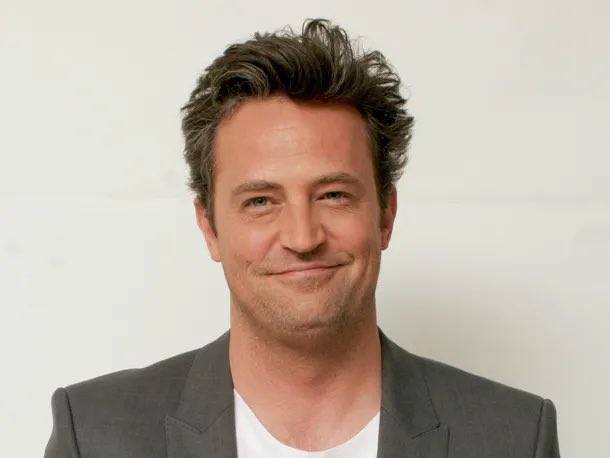
Mathew Perry was a beloved American hero. Well, he was Canadian but we won’t hold that against him. Affectionately known for his role as Chandler Bing on “Friends,” he was hilarious, rich, and lived a life that we dream of. Yet, there was that big terrible thing.
Our hearts broke when we heard the news about Mathew Perry’s death. We wondered how the heck this can happen? And while Mathew’s story is tragic, it’s unfortunately not unique. Many struggle with a drug and alcohol addiction. While Mathew didn’t die from an overdose, his addiction brought him to the condition that caused him to lose his life along with many other trips to the hospital. So what happened? Why couldn’t he put down the substances?
“Connection. Love is what heals addicts.” My mentor Sony Perlman explained to me on my podcast, The Gabi Koyenov Podcast. Sony is an addiction and recovery expert that runs a sober living located in Monsey, New York. Sony explained that, “most addicts run on an empty love tank.” He used a car analogy to explain different levels of functioning. Just like there are sedans, SUVs, super cars, and so on, humans have varying levels of function and capability. And no matter how incredible a car is, if it’s tank is empty, it’s not going anywhere. Or if its battery is empty for the environmentalists.
Many people think of addicts as being broken or disordered in some sense. As if they have engine damage, in terms of the analogy. Sony said that most of the time, there is nothing wrong with addicts; their tank is simply low. And when that tank is filled, there is a very small limit to how far they can go.
There seems to be a paradigm that drugs and alcohol are the problem. Except, for the addict, drugs and alcohol are actually the solution. The solution to all the pain. The solution to not being able to live with themselves. The solution to not being enough. When we are connected and feel loved, we are enough. We’re able to tolerate whatever pain we’re going through because we have that strong support to lean on. To know that everything is okay and that we are okay.
Well, if that’s true, then what the heck happened to Mathew? How was one of the most beloved men on Earth unable to put down the substances if indeed he was loved? I mean, he was a friend to millions of people. His “tank” should be overflowing!
In his memoir, “Friends, Lovers, and The Big Terrible Thing”, Mathew reveals a very formative story in his early years, and he used this story as an allegory to how he felt throughout his life. Mathew tells the story of how he was an unaccompanied minor on a plain as a boy. He was visiting his father in America. This story capsulated Mathews feelings towards himself. That no matter how much money, sex, fame, or praise he received, he was always that lonely unwanted boy on that plain.
In short, it’s not just about being loved, it’s about being able to accept love. Often, we have experiences that can change our core beliefs about ourselves. Sometimes they can be positive. For example, I have a friend that was an accomplished gymnast growing up. Those early successes transferred into his adult life. They taught him that if he puts the work in, he can accomplish anything he puts his mind to. He has an infectious confidence.
However, sometimes we can have experiences that change our core beliefs for the negative. Trauma is a buzz-word we hear a lot these days. Simply put, a traumatic experience is a deeply distressing experience that often ignites our fight-flight-or-freeze response. However, Sony defines trauma a little differently. He says trauma is any experience that changes the way we look at ourselves in a negative way. Such as: a teacher calling you stupid, your parent favoring another child over you, being broken up with; all of these experiences have the ability to corrode a strong sense of self. It can make us feel that we are not enough. That we are unworthy of being loved. And this breaks our love tanks. So even if we are loved, we make excuses and reject that love. Perhaps we think, “that person doesn’t love me, they’re just trying to get something out of me,” or, “If they knew the real me, they would leave me.”
Ultimately, Mathew was living with a broken tank that prevented him from feeling good enough. He walked around feeling unworthy despite all of his worldly acquisitions. The money, sex, and fame weren’t enough and didn’t truly fulfill him. I’m compelled to feel that this is a wakeup call to all of us that may believe that we will be enough when we get the house, car, girlfriend, etc. It seems like we’re chasing ghosts. Being enough needs to be felt in the present moment–it’s not a future reward but a birthright and a necessity. And if this is true, then how can we heal? What can we do?
For the purposes of this blog post, I’d like to leave off with these profound questions. What can we do to feel like we are enough? That we are loved? What can be done to correct traumatic experiences that have left us feeling damaged in some way? And what can we do for others? How can we be there for our loved ones in a way where they feel truly connected? Can we truly make others feel loved, and if so, how?
In future blog posts, I hope to explore some solutions. However, I feel like doing so here would be disrespectful to Mathew Perry. It would almost be saying that Mathew didn’t try those things. But, friends, there is always hope. I fully believe that with guidance and taking action in the right ways, we can overcome our own big terrible things.
 The Men's Therapy Studio
Leave a comment